Skip to content

Industrial and Manufacturing.

Floor care in Industrial and Manufacturing sites is dictated by the plant, not the cleaner: sealed concrete under forklift traffic, oil and swarf tracked out of machining bays, demarcation lines that have to stay readable, and a shift pattern that rarely offers a quiet hour. Machines have to work around production and survive it.

Find Distributor
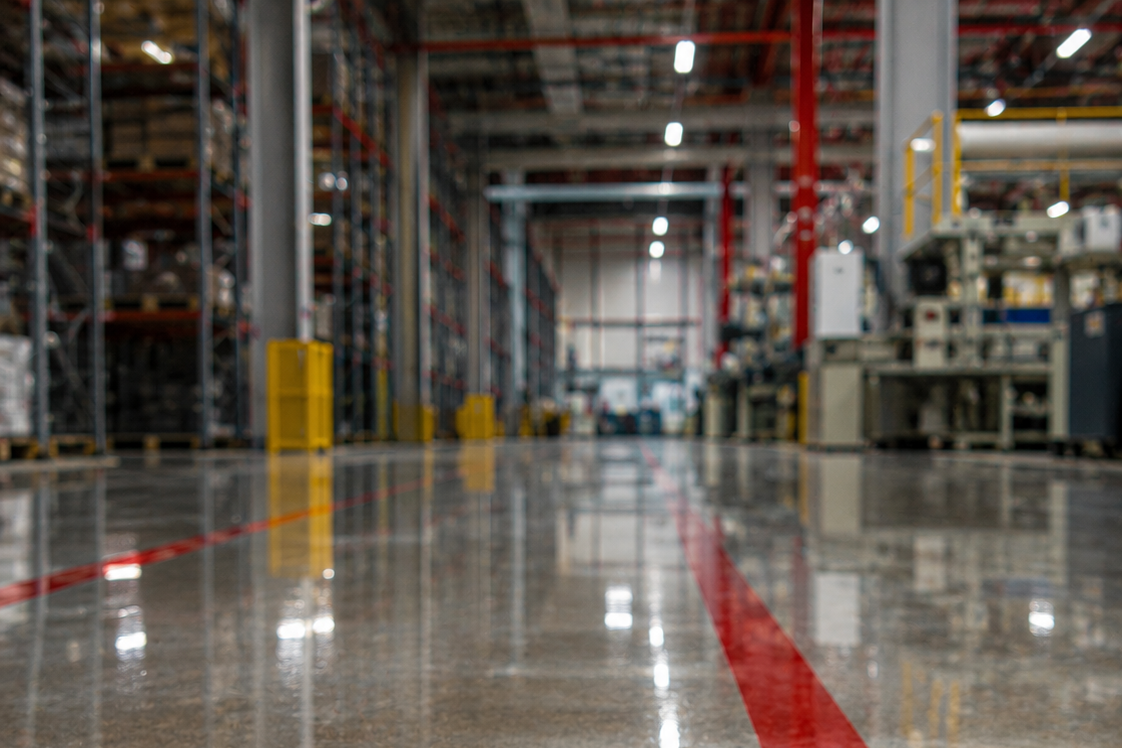
Sealed concrete floor in an industrial facility
WHAT MATTERS

Floor care built for industrial and manufacturing

Forklift tyre marking on concrete

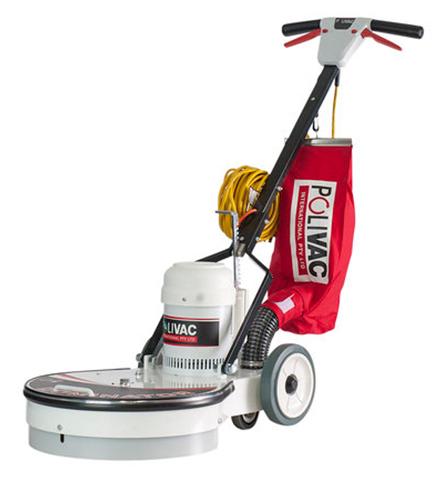
Rubber tyre marks are not soil, and a scrubber pass will lift the dirt around them and leave the marks behind. Ultra-high-speed burnishing is what removes them and restores the appearance of a sealed slab, which is where the SL1600 Dominator and SL2000 Stingray earn their place. On large open floors where you want to cover ground without stopping to swap batteries or drag lead, the GAZ burnishers running Closed Loop engine emission technology are the alternative.

Oil and coolant leaving the bay

Machining and press bays leak, and the film travels down the traffic aisle on the soles of boots and the wheels of trolleys before anyone notices it. That is a slip risk in a place where people are carrying things, and detergent alone tends to spread it rather than lift it. The C27 GEN2 and the MM1700E automatic scrubber handle the open aisle work, while the SHARK low-profile scrubber gets under conveyor lines and racking where the film builds up out of sight.

No clean-down window

On a continuous or double-shift roster there is no hour when the plant is empty, so cleaning happens alongside production with forklifts still moving. Trailing lead across a live aisle is its own hazard, which is the argument for battery machines like the SL2000 battery burnisher and the GB380D battery mini scrubber. They also let an operator work a section, finish it and move on without negotiating power points on a plant wall.

Grit, swarf and abrasive dust

Metal fines, weld spatter and grinding dust destroy pads and shred squeegee blades, and a wet machine driven over them will grind them into the coating. Dry pick-up before wet work is not optional in a plant, and the WOMBAT canister vacuum and KOALA backpack are the machines that make it quick enough that crews actually do it. It also keeps abrasive debris out of the machines you have just paid to maintain.

Food-grade and washdown areas

Resin and anti-slip flooring in production and washdown areas is specified with a deliberate profile, and that profile holds soil exactly where a flat pad rides straight over it. Working into the texture rather than across it is the whole job, which is where the oscillating JH-G4 and JH-G5 sander/scrubbers earn their place, noting these are Mitchell machines POLIVAC supplies rather than builds. Around plinths, drains and coving the A23 Mini gets in close, and what your own food-safety obligations require of the regime is a question for your quality team.

Ventilation rules for gas machines

Gas burnishers and the ST2100 gas stripper cover ground that corded machines cannot, but a gas machine in an enclosed area is a question for your own ventilation and confined-space rules before it is a question about the machine. POLIVAC’s gas range uses Closed Loop engine emission technology, and your distributor can walk through where it fits your site and where an electric or battery machine is the sensible choice instead.

A production floor is a working surface before it is a clean one. Sealed concrete takes forklift and pallet-jack traffic all day, absorbs whatever comes off the machines, and still has to hold safe demarcation lines and readable aisle markings. The floor that looks acceptable at the end of a shift may be the same floor that put a slip incident in the register at 3am, and the two problems are rarely fixed by the same machine.

POLIVAC has built machines in Kensington, Melbourne since 1949 and has been ISO 9001 certified since 1997, which in practice means a range designed around plant conditions rather than office conditions. Burnishers, scrubbers, strippers and vacuums are sold and serviced through 225+ distributors across Australia, so the machine on your floor is backed by someone who can be on site rather than a freight lane.

The floors you actually have

Almost no manufacturing site is a single surface. The main production area is usually sealed or coated concrete carrying forklift traffic and demarcation marking. Around it sit epoxy in the wash bay or food-grade area, mezzanine and amenities vinyl, sheet vinyl or safety flooring in the change rooms, and carpet in the front office and meeting rooms. Each behaves differently under the same pad. A burnisher that restores a sealed slab is the wrong tool on safety vinyl, and a scrubber set for aisle soil will not touch the coffee traffic in the office. The practical answer is a small, deliberate fleet rather than one machine asked to do everything: burnishers for the slab, a scrubber sized to the aisle, and a Predator or Terminator extractor for the carpeted areas, so nothing gets cleaned badly because it was the only machine on the trolley.

Building a regime around the shift roster

The realistic question is not what a perfect regime looks like, it is what can be finished in the access you actually get. Most plants end up with a short daily pass on the main traffic routes, a heavier scrub through the bays on a weekly or changeover cycle, and burnishing scheduled where appearance and marking legibility matter most, typically visitor routes, despatch and QA areas. Coating renewal is the one that needs planning: stripping and recoating with the ST2100 gas stripper is section work, done against a shutdown or a quiet shift, with the area handed back before production restarts. Working in sections is also what keeps the job honest, because a section that has been properly cured beats a whole floor that was rushed back into service.

Parts, service and downtime

A cleaning machine that is out of action for weeks quietly becomes a manual labour cost, so serviceability matters more here than in most sectors. POLIVAC machines are manufactured in Kensington, Melbourne, and the parts and service chain runs through a network of 225+ distributors across Australia rather than back through an importer. POLIVAC does not sell direct: your distributor quotes, demonstrates on your own floor, inducts to your site rules and handles servicing. It is worth having that conversation with a plant walk-through rather than a spec sheet, because aisle widths, racking clearances and where you can and cannot run a gas machine will narrow the shortlist faster than any comparison table.
RECOMMENDED MACHINES

The industrial and manufacturing kit

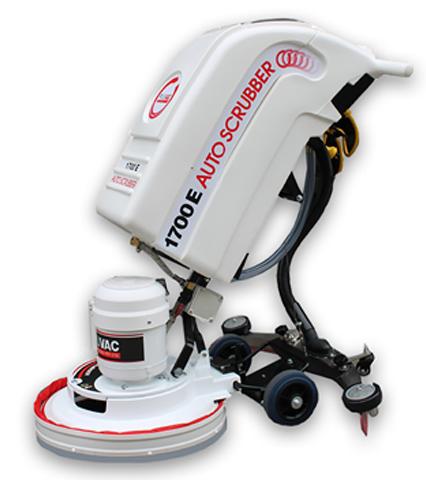
MM1700E – Automatic Floor ScrubberELECTRIC SCRUBBERS WITH DRYING FUNCTION

MM1700E – Automatic Floor Scrubber

View product
C27 GEN2 Rotary ScrubberELECTRIC SCRUBBERS

C27 GEN2 Rotary Scrubber

Fast, deep scrubbing for hygiene-critical floors.

View product
SHARK – Low Profile Electric ScrubberELECTRIC SCRUBBERS

Shark – Low Profile Electric Scrubber

Electric scrubber for stripping and scrubbing jobs under gondolas.

View product
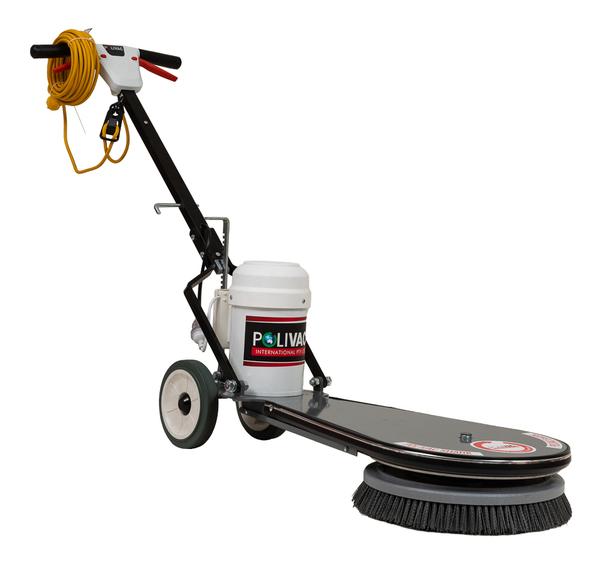
SL1600 Dominator Ultra High Speed BurnisherULTRA-HIGH SPEED STRAIGHT LINE BURNISHERS

SL1600 Dominator Ultra High Speed Burnisher

View product
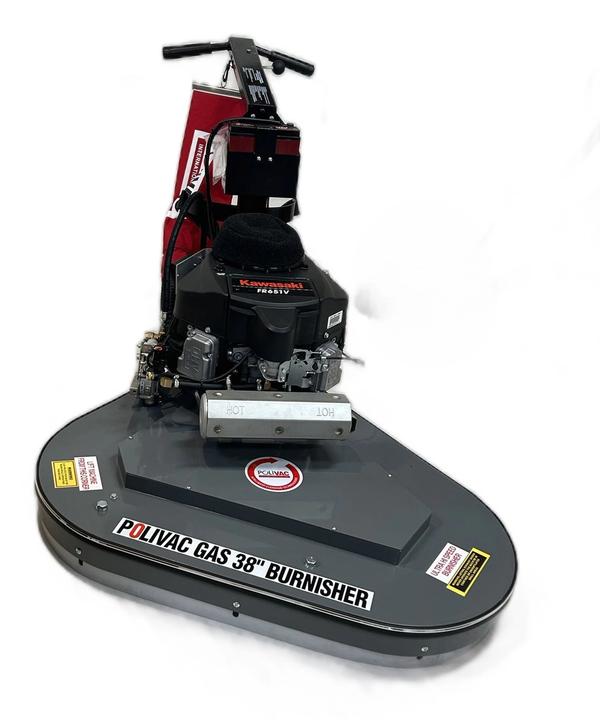
Gas 38″ 100cm High Speed Gas BurnisherGAS OPERATED FLOOR BURNISHERS

Gas 38″ 100cm High Speed Gas Burnisher

Gas operated floor burnisher for shopping centres.

View product
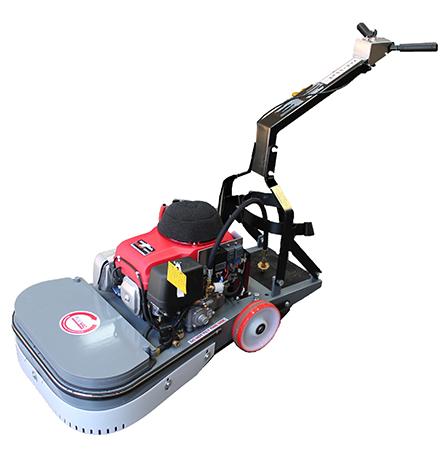
ST2100 53cm Gas Stripper With 13HP Honda EngineGAS OPERATED STRIPPING MACHINES

ST2100 53cm Gas Stripper With 13HP Honda Engine

Gas operated stripping for floor cutback.

View product
RELATED SECTORSEducationGovernment and DefenceCommercial Cleaning Contractors
QUESTIONS

Common questions in industrial and manufacturing

Ready to spec your site?

Your nearest distributor will walk the site with you and pull the right system together — machines, pads, chemistry and training.