Government and Defence
Government and Defence floor care is estate work, not building work: one fleet has to cover offices, depots, workshops, messes and heritage halls, with escorted access, site inductions and short working windows. Machines are judged on service life, local parts and local service as much as on what they do to a floor.
Find Distributor
Public sector and defence estates are rarely one property with one floor type. A single portfolio can include open-plan office accommodation, workshops and hangars on sealed concrete, messes and kitchens, accommodation blocks, training facilities, and older buildings with timber and terrazzo that were laid long before anyone specified a cleaning regime for them. The fleet has to be broad enough to cover that, and standard enough that operators moving between sites are not learning a new machine every time.
POLIVAC has manufactured in Kensington, Melbourne since 1949 and has been ISO 9001 certified since 1997. Machines are sold and serviced through 225+ distributors across Australia, alongside export markets. For buyers who need to know where a machine and its parts come from, that distinction is worth stating plainly: the POLIVAC-built lines are made here, and the Mytee and Mitchell machines POLIVAC also supplies are imports.
An estate, not a building
The floors across a public sector or defence estate rarely have anything in common except who owns them. Office accommodation runs carpet tile with vinyl in the amenities and kitchenettes. Workshops, hangars and transport depots are sealed concrete carrying vehicle and forklift traffic and whatever comes off it. Messes and kitchens have their own hygiene regime and their own wet floors. Accommodation blocks are closer to a hotel than an office. Older civic and heritage buildings can carry timber, terrazzo or original tile that needs a considered approach rather than the standard one. A fleet specification that starts from the estate rather than from a single flagship building is the one that survives contact with the other forty properties.
Access, induction and the working window
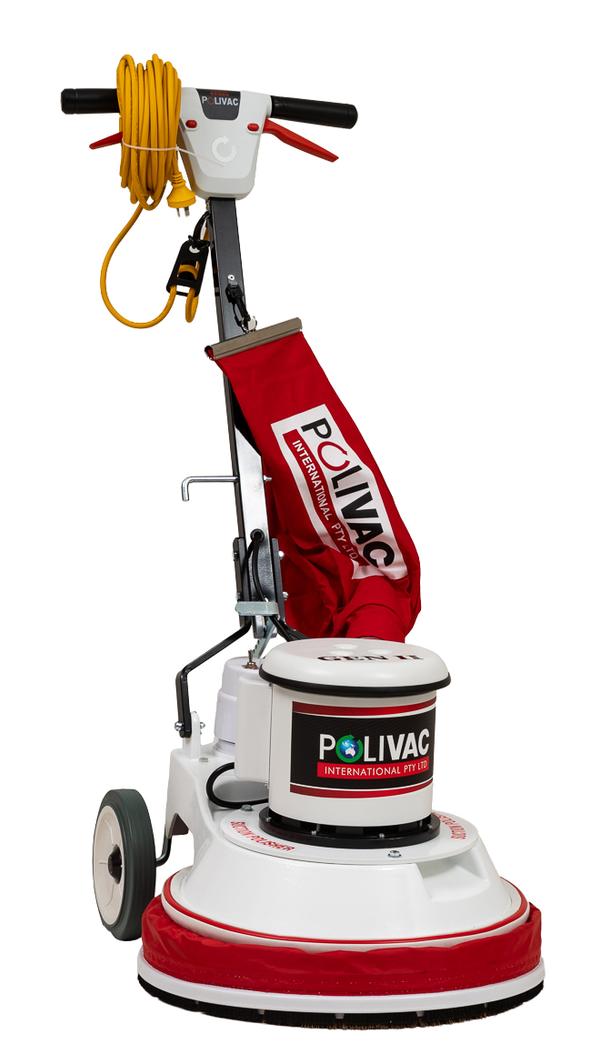
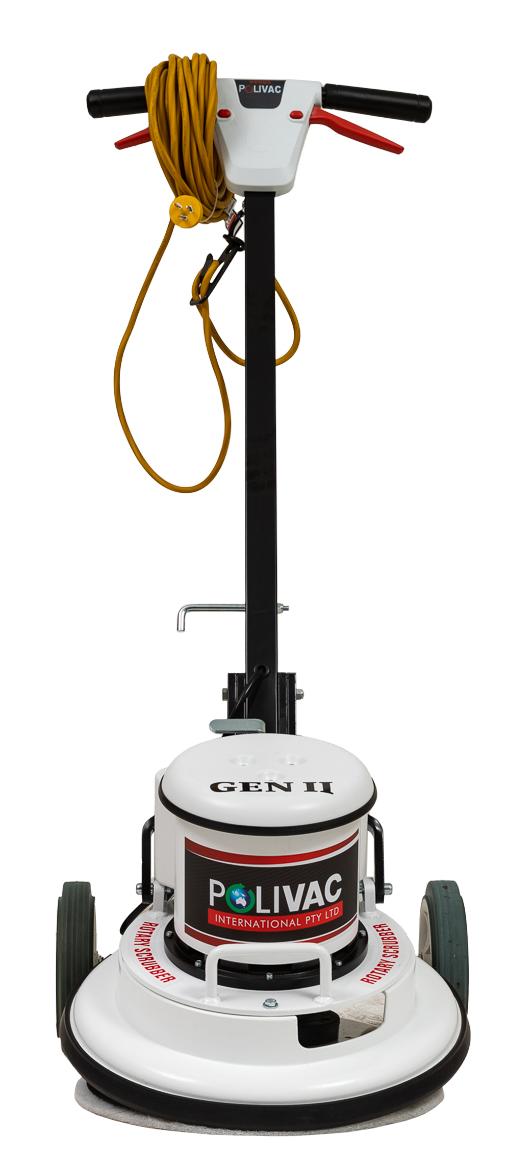
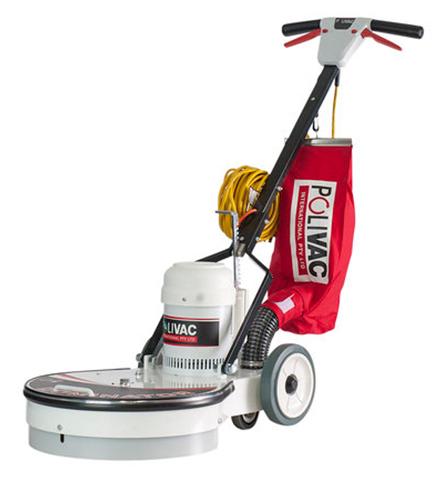
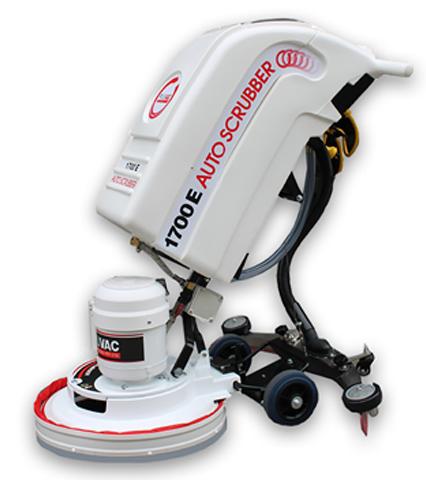
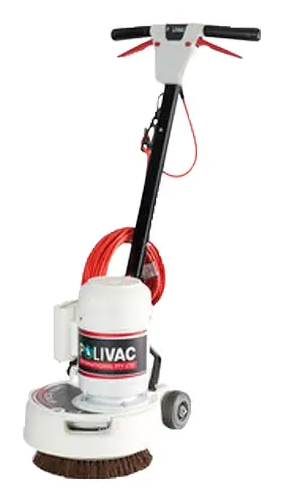
The practical constraint in this sector is usually access, not technique. Occupied buildings mean work happens outside hours or in occupied corridors; secure areas mean escorts, inductions and a fixed slot; some sites restrict what can be brought on at all. Machines that capture residue at the head, such as the PV25 suction polisher range, are useful where work has to happen with people around rather than in an emptied building. Gas machines can be highly productive in hangars and depots, and POLIVAC’s gas range uses Closed Loop engine emission technology, but whether they are permitted on a given site is a matter for your own ventilation and site rules and should be settled before specification, not after delivery.
Australian-made, and what it buys you
Australian manufacturing matters commercially here for reasons beyond preference. Machines built in Kensington, Melbourne mean spare parts held domestically, servicing by a local distributor rather than a return-to-manufacturer process overseas, and no import lead time sitting between a breakdown and a repair. Over the length of time an estate holds an asset, that is generally the difference between a machine that stays in service and one that is quietly retired because the part became difficult. POLIVAC does not sell direct, so specification, quoting, training and servicing all run through the distributor network, and there are 225+ of them nationally. Where local content is part of the assessment, keep the distinction between POLIVAC-built machines and the imported lines POLIVAC supplies explicit in your documentation.
Common questions in government and defence
Ready to spec your site?
Your nearest distributor will walk the site with you and pull the right system together — machines, pads, chemistry and training.